

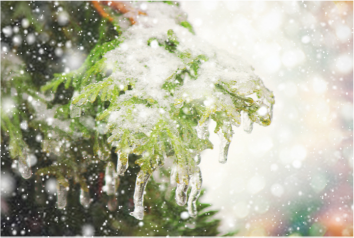
Winter is a great time for photography. The air is crisp, the snow (when we get it) is clean and untouched, high streets are strung with lights and rain leaves reflections everywhere. The cold is not as bad for photographers as you might think.
Whether you are photographing the children playing outside or the view from a mountain top, these tips will help.
Look for contrasting colours
Contrast makes a winter photo. A deep blue sky against pure white snow (rare in the UK, we know) is the classic. On a grey day, look for one strong colour to set against the gloom: a red coat, a postbox, berries, a painted front door.
Keep it simple. A plain scene with one clear contrast usually beats a busy one, even with the camera left on Auto.
Try different angles
A new viewpoint changes a picture completely. If there is something interesting in the distance, climb for a higher view of it rather than shooting from the ground. If the children are playing in the snow, shoot down on them from above, or step back and show more of the scene around them. You may be surprised by how much better it looks.
It's not all about snow: try fog and rain
Snow is lovely, but it is not the only thing that makes winter pictures special. Fog simplifies a scene and gives it mood. Rain gives you reflections. In London in December, a black cab splashing through a puddle under the lights is a picture straight out of a film.
Use the city lights at night
If you are near a town or city, go out after dark and see how it looks lit up. Christmas lights in their thousands are magical, and in snow or fog the street lamps add something special to an otherwise ordinary view.
It is also a way to make a familiar place look different. Photograph a busy high street in the evening and the artificial light will make it new again.
Catch the snow fresh
Untouched snow looks clean and bright, and gives a picture a sense of calm. To beat the footprints you will need to plan: shoot while it is still falling, or get out early in the morning.
Falling snow is worth photographing in itself. A slower shutter speed turns the flakes into white streaks. A faster one freezes them as individual flakes.
Shoot landscapes at sunrise and sunset
The best light for landscapes comes at the start and end of the day, and in winter both arrive at a civilised hour.
- Sunrise. Bright, colourful and often frosty, with mist rising from water. Try aperture priority mode and experiment until you get what you want.
- Sunset. Orange sky, red sun, and harder to capture than it looks, because the land is dark and the sun is bright. Put the camera on a tripod, and try longer exposures as the light fades.
Keep yourself warm
Dress warmly and wear good waterproof boots. Standing still with a camera is much colder than walking. Your hands suffer most, especially in the wind, so bring gloves and a couple of hand warmers. You do not want to go home early because your fingers are numb!
Conclusion
Winter is a beautiful time of year and full of chances for good photographs. If you would like some of yours framed, get in touch. We can advise on the best materials and sizes, and our picture frames are made to measure.
Call EasyFrame on 01234 856 501 or email sales@easyframe.co.uk. We are happy to talk it through even if you do not want to buy.