

There are hundreds of styles and movements in art, but most of us know only a handful, and Impressionism is one of the best known. It can be seen as the midway point between the traditional, realistic painting of the early 19th century and the abstract art that dominated the 20th.
Were water lilies and idyllic river scenes all there was to it? Not exactly. Familiar and inoffensive as it looks today, Impressionism was a hugely influential change in the way people thought about art.
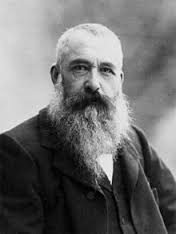
It emerged in Paris in the 1860s, as a reaction against established opinion. Paintings were then prized for their polish, and typically showed carefully staged scenes from history or religion. That changed when four young painters, Claude Monet, Pierre-Auguste Renoir, Alfred Sisley and Frédéric Bazille, came together to rock the boat.
The early days
All four were more interested in capturing the present moment than in history or mythology. More often than not that meant landscapes, a subject the French art establishment thought of little account.
Most revolutionary was the way they worked. They did not make sketches outdoors and finish the painting in the studio. They painted on the spot, in the open air ('en plein air', in the French phrase), under light that changed as they worked.
That was made possible by the invention of the paint tube in 1841. Before then, artists had to mix their own pigments and oils. Renoir is famously quoted as saying that without paint tubes 'there would have been no Impressionism'.
Nothing like it had been seen, and the art world was extremely sceptical.
Breaking into the Salon
In the 1860s nobody associated the word 'salon' with hairdressing. The Salon was the great annual art exhibition in Paris, held under the authority of the Académie des Beaux-Arts. Every year painters submitted work to its jury, and the future Impressionists did the same. Their work was regularly turned down, because it did not fit the accepted style.
By 1863 so many artists had been rejected that there was an outcry, and the Emperor Napoleon III declared that the rejected paintings should be shown in an exhibition of their own, the Salon des Refusés. It was a one-off, but it was a turning point.
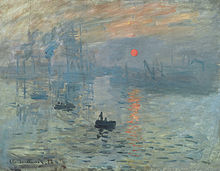
The group went on to hold independent exhibitions. At the first, in 1874, Monet showed 'Impression, Sunrise', and a critic's mocking use of its title gave the movement its name. Public acceptance came gradually. By the 1880s Renoir, Monet and their colleague Camille Pissarro were successful and widely recognised, and their way of painting was commonplace at the Salon itself.
It was a triumph for a new kind of artist, who celebrated the here and now, stood by their beliefs and refused to bow to the establishment. Most important of all, the move away from strict realism opened the way for increasingly abstract art.
The great works
The Impressionists produced thousands of paintings. Walk into any large gallery in Europe and you will probably meet one within five minutes. To recognise one without reading the label, look for a landscape or an informal group scene, with thick, visible brushstrokes, vivid colour and little or no black.
We think these five sum up the movement best:
- 'Impression, Sunrise', Claude Monet, 1872
- 'The Bridge at Villeneuve-la-Garenne', Alfred Sisley, 1872
- 'Dance at Le Moulin de la Galette', Pierre-Auguste Renoir, 1876
- 'The Boulevard Montmartre at Night', Camille Pissarro, 1897
- 'Water Lilies', Claude Monet, 1906
From the sun-dappled crowd in the Renoir to the blurred street lamps of the Pissarro, they capture the vivid, life-affirming immediacy of Impressionism. And the last belongs to the most famous series of Impressionist paintings ever made.
Monet's water lilies
Monet made his best-known and best-loved paintings at his home in the village of Giverny. For the last thirty years of his life, from the late 1890s, he painted the water lilies in his garden obsessively, producing around 250 pictures.
These paintings, usually a stretch of lily-covered water with no bank or horizon, show the classic Impressionist style, and also challenge it. The later ones move towards abstraction. The shapes become less distinct and the colours more intense, due in no small part to the cataracts that affected Monet's sight.
They now hang in galleries all over the world, a testament to the genius of Monet and his fellow Impressionists.
Bringing the Impressionists home
Now that you know the story, why not find prints of your favourites and hang them at home? EasyFrame will help you choose the right frame and mount, and because every frame is made to measure, it will fit your print to the millimetre.
We also frame canvases, if you have been inspired to paint, and photographs. Our multi-aperture frames hold several pictures together, such as a set from a visit to Monet's garden at Giverny.
Find out more on our picture frames and mounts page.