

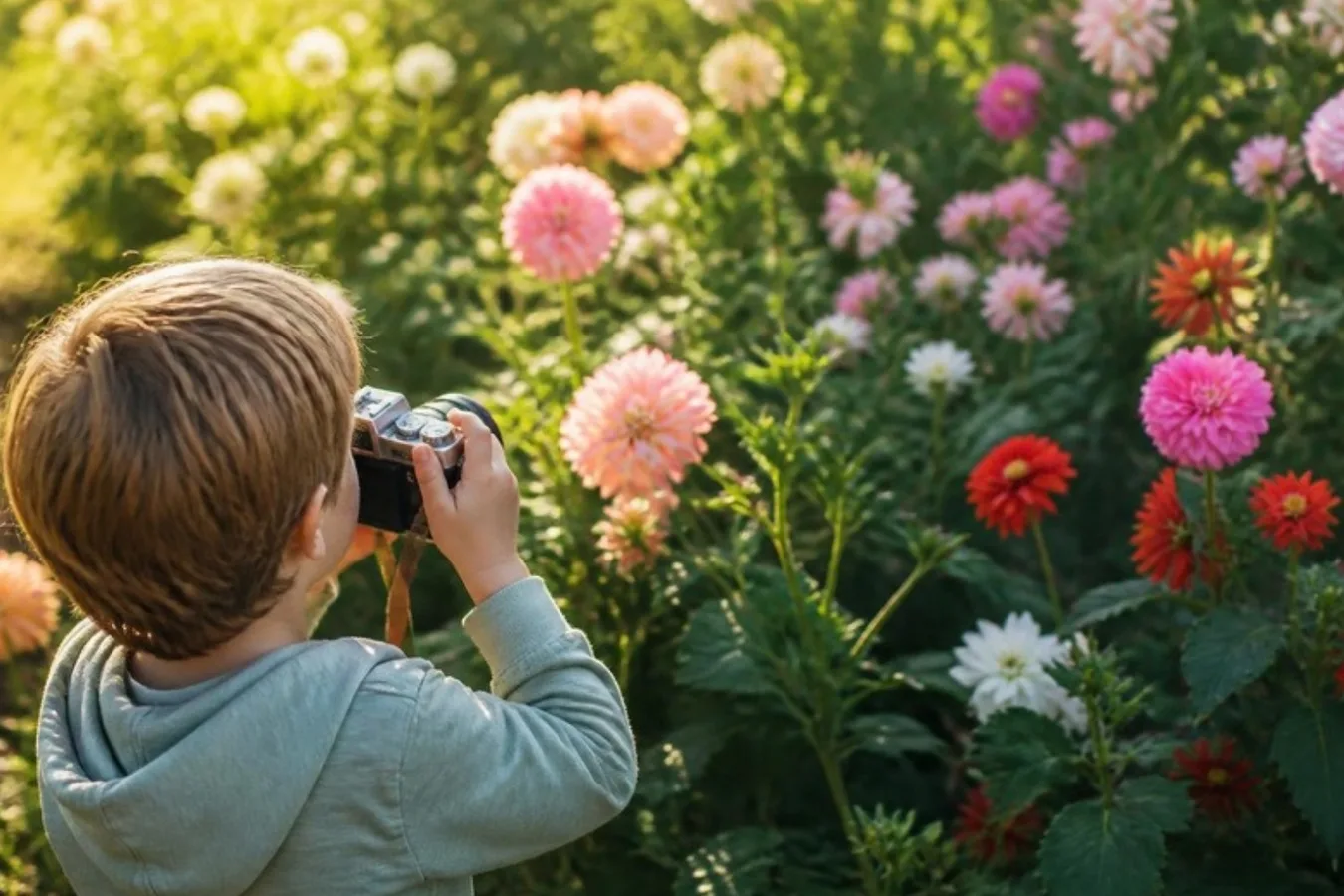
Art is good for the soul. It's a remedy for sadness, frustration and boredom, and it teaches children to express themselves away from the school curriculum. It also gives proud parents plenty to frame and hang in the living room.
There are more ways to make art than ever. You can still get out the poster paints and sugar paper, or let children draw directly onto the family tablet. And most children and young teenagers now carry an excellent camera in their pocket. It may mostly be used for Snapchat selfies, but a smartphone is a great way to develop an interest in photography. Teach the basics and let them build from there.
1. Let them use photo apps
You may not want them on social media, and you may fear that an app like Instagram will stunt their skills. But nothing captures a child's attention like something they've been banned from. If they have their own phone, set up a private Instagram account and let them experiment with taking photos, applying filters and uploading.
Taking and editing photos is easy and fun, and it builds confidence. If they really enjoy it they'll soon find its limits, and then you can introduce them to photography beyond Instagram.
2. Get them a mirrorless camera
If you want your child to take up photography, you're probably a photographer yourself, with an expensive camera of your own. But many good cameras, DSLRs in particular, are heavy and bulky, which makes them hard for children to handle.
A good mirrorless camera produces photos on a par with a DSLR and is much lighter and easier to hold. Good cameras are never cheap, and the cheaper mirrorless models cost around £450, so it's worth insuring it.
3. Teach them how to handle it
Even competent adults struggle with a new camera, so don't assume your child will understand theirs at once. Set it to auto rather than manual before you hand it over. Then, using a professional guide like this one, spend some time coaching them on how to hold it.
Gently remind them that it's an expensive piece of equipment and show them how to look after it. Give it a sturdy waterproof case, ideally one that won't embarrass its owner in front of school friends.
4. Encourage them to experiment
In an ideal world every camera owner would read the manual cover to cover. Most adults can't manage that, never mind a child.
Instead, encourage them to play with the camera, try every feature and take lots of different photos. A useful exercise is to take several shots of one object using different settings and viewpoints. Stay on hand with the manual to help when needed.
5. Teach them about composition
Composition is often instinctive, but a few tips help at the start. Keep them simple for children.
- Fill the frame, so the subject isn't drowned out by other details.
- Introduce the rule of thirds.
- Use framing within the photo to emphasise the subject.
- Keep the camera straight, which is easier said than done, and aim for straight lines in the finished shot.
6. Let them try manual mode
At some point, let your child try manual mode, where they control everything: ISO, aperture and shutter speed. These are advanced skills and may take time to grasp. You may need to teach more formally than usual, referring to the manual and using technical terms.
To make these lessons work, encourage plenty of play and plenty of photos. Use helpful shortcuts such as aperture priority mode (usually marked A or Av), which lets you choose the aperture while the camera sets the shutter speed. Switch back to automatic between sessions so they can carry on shooting without you.
7. Print their best photos
Children know when they've made something worth praising. Resist the urge to print every photo. Choose a few of your favourites, and theirs, and have them printed. Frame them in a multi-aperture picture frame, or a single picture frame with a mount, and hang them around your home. It reminds your child what they can do, and what a good investment that camera was.