

The secrets to framing art
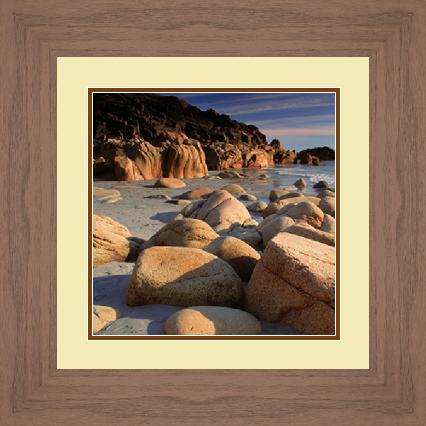
Holiday snaps, favourite landscapes, family photos and art prints: well-placed framed pictures give a living space a real "home sweet home" feeling. But having the best photographs in the world doesn't guarantee they will look good next to one another on your wall.
What you hang is entirely up to you. The general rule is "anything goes, as long as you like it". Even so, here are a few things to keep in mind when you create a gallery wall.
Think about the room, not just the wall
For pictures to work with your furniture, consider proportion. Small images get lost behind large furniture, and images that are too large can feel clunky and overbearing.
Walls that are not white are great for displaying photos. If the wall, the pictures and the furnishings share similar tones, they pull the whole room together. You can't go wrong with a white background either. Art on patterned or multicoloured walls struggles, though. If your feature wall is patterned, try a striking frame to balance the picture against the backdrop.
Don't match everything
Mixing frames of different styles gives a room personality, as long as they don't clash too much. Keep one thing consistent. Use all timber frames or all white frames, for example, in any shape, size or style. The images can follow a theme too, such as seascapes or cities at night.
Arrangement is key
- Hang at eye level. It sounds simple, but many households miss it. Consider whether the pictures will mostly be viewed standing or sitting.
- Follow lines. Position pictures along existing lines in the room, such as door frames, furniture and windowsills, or create imaginary reference lines of your own.
- Balance large pictures. A large picture at one side of the room needs something equally prominent, such as an armchair, as a visual counterweight.
- Use direction. Pictures arranged vertically make walls look taller. Grouped horizontally, they make a room feel wider.
Asymmetry is fine
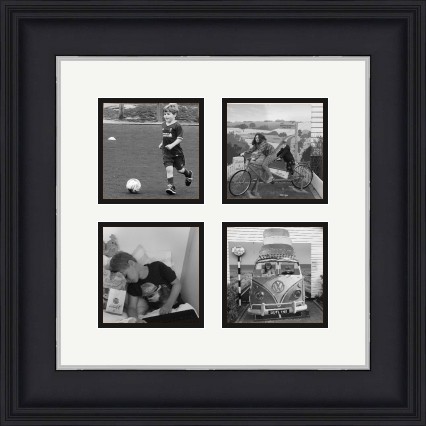
Art doesn't have to be centred. Try hanging a framed piece off-centre and balancing it with a floor lamp or tall plant on the other side to fill the empty space. This works very well with smaller artworks.
Preparation
Before anything goes on the wall, lay the pictures out on the floor to see whether they go together, and move them around until the combination is right. Take measurements if you like, but you can also trust your eye, because framed art doesn't always look right when it fits too perfectly. Ask someone to hold each piece up so you can find the best place for it in the group.
Pull the room together with your artwork
Look at the patterns in the room where your feature wall will be. You could pick up a pattern from an abstract picture and echo it in your cushions and upholstery. Using your artwork as the starting point for your colour scheme gives a room a considered, unified feel.
If you're not ready to commit
If you have little wall space, or you're hesitant about committing to your ideas, you don't have to hang everything. Picture rails are a great way to display pictures without hammering nails into the wall, and they let you move things around and try different looks without damage.
Help and advice is free
Don't be afraid to ask a professional. Having an idea is one thing, and a good professional can guide it into something you'll be proud of. EasyFrame is always happy to help, with advice on buying, collecting and of course framing.
It can be tricky to hang your artwork so that it all sings in unison. We hope these tips help. Be bold, be creative and bring your feature wall to life.