

By Paul Dunwell, writing for EasyFrame
© Copyright EasyFrame 2019
What this article is about
This article is about cubism. In very simple terms, it is a style of art whose exponents try to depict every possible viewpoint of the subject at once, so it looks geometrical and occasionally like cubes. Pablo Picasso, Juan Gris and Georges Braque are credited with starting the Franco-Spanish movement in the early 20th century and thinking outside the box, as it were. It has attracted many other artists since and is still going strong.
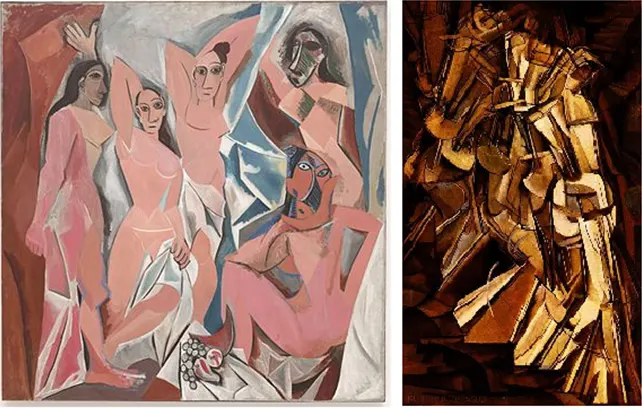
Cubism seems an odd way to render organic forms, especially when you remember that nature abhors a straight line (an observation credited to the 18th-century architect William Kent). Yet it is intriguing, and cubist pieces can stop an audience in its tracks.
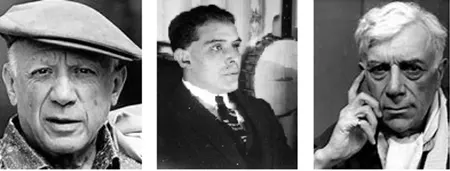
For anyone who cannot understand why an artist would embrace cubism, here is a run-down of the eight points to it (a cube has eight vertices; well, I thought it was clever!). I'll also profile some pieces you should be able to find, after which EasyFrame would be delighted to frame them for you!
1. Cubism was unprecedented and heralded all other abstract art
Cubism is widely regarded as the first abstract art and the beginning of modern art, the final nail in the coffin of the style that had prevailed since the Renaissance. It was 'avant-garde', meaning experimental, in that it ignored perspective and tried to show its subject from several angles at once. It broke the mould.
Before it, art might be thought of as realism, where artists depict the world as they see it. Surrealism, which tries to capture what we perceive in the twilight between sleep and wakefulness, was born only in 1924. Cubism arrived between 1907 and 1914, so it was in the vanguard: a revolutionary way to capture perceptions.
2. Cubism was not conceived in a vacuum
Something always sets the scene for a leap forward. For early works such as Picasso's 'Les Demoiselles d'Avignon', the influence came from African tribal masks. In the 21st century we are used to ground-breaking artists looking to other cultures for inspiration. Paul Simon's collaborations with the South African choral group Ladysmith Black Mambazo are an example. Picasso perhaps showed the way!
3. Cubists are not bound by cubes
The movement's name is a misnomer of sorts. Cubists are not stuck with straight lines. They use spheres, cones, cylinders and more, and sometimes they create collages.
4. Cubism as art has influenced life
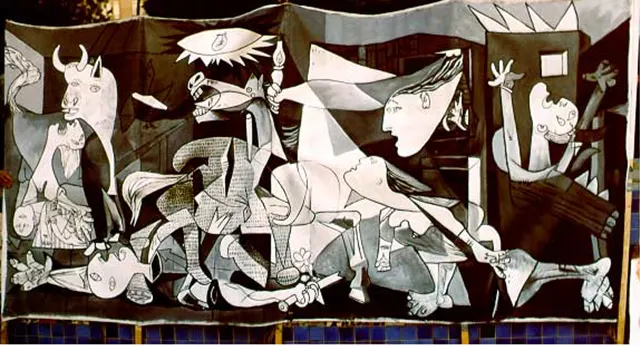
Cubism has had political and social impact. A marvellous example is the massive 'Guernica'. (At 12ft x 25ft, EasyFrame would be delighted to frame a reproduction for you, or indeed the original if you can prise it out of the Museo Reina Sofia in Madrid.)
Picasso painted it in 1937, 30 years after 'Les Demoiselles d'Avignon' had made him famous. It shows, amid destruction and carnage, a mutilated horse and screaming women, and it was so startling that it helped alert the world to the horrors of the Spanish Civil War. Guernica was bombed by the Germans, part of a bloodbath that killed half a million people in three years and proved a warm-up for World War 2. So it was a timely warning. Afterwards many Britons went to Spain to help. The writer Laurie Lee, who wrote 'Cider with Rosie' and 'As I Walked Out One Midsummer Morning', was one. Ernest Hemingway went as a reporter.
5. There is more than one brand of cubism
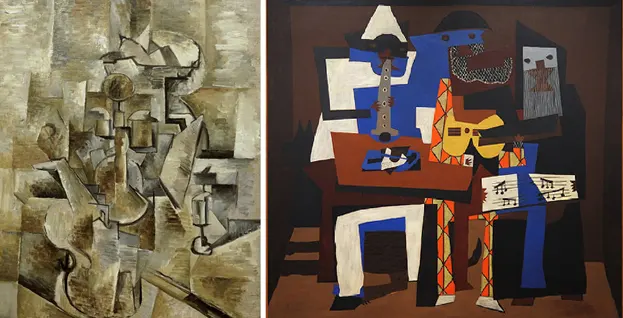
Cubism can be divided into two kinds:
- Analytic cubism, which came first, breaks objects into their constituents and reassembles them.
- Synthetic cubism, which followed, brings in new elements, textures and shapes to build images.
6. You are not alone if cubism confuses you
When it first appeared, most people neither liked nor understood cubism. Now they like it. They probably still don't understand it. See point 5!
7. Cubism is not limited to two dimensions
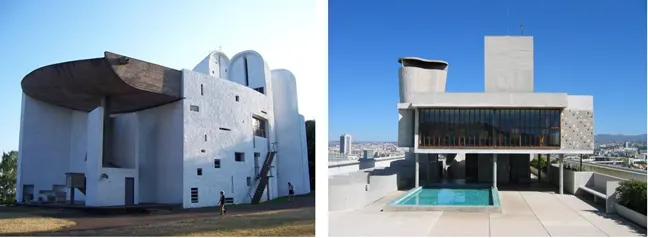
Cubism has heavily influenced modern architecture. Le Corbusier was so influenced by it that it helped him see how cars would need to drive city planning.
8. If you like cubism, buy it!
Cubism is an acquired taste, and it owes its existence to the ability of Picasso, Gris and Braque to think outside the box. You can do the same. If you want to be a bit avant-garde and hang something different, look for some cubist prints and have them framed to suit your décor or the frames you already have.
Conclusion
Cubism will stay popular and keep arresting attention, and even a print is likely to hold its value.
If you buy cubist prints or originals, you'll need them framing. Unless you know your stuff when it comes to picture frames and mounts, it's worth going to experts. EasyFrame is an obvious and affordable supplier, whether you want everything you'd need to do the job yourself or would rather its experts did it for you. Any good framer will show you a range of solutions and advise on what suits the work and where it will hang.
EasyFrame is on 01234 856 501 and sales@EasyFrame.co.uk, and they'll always chat even if you don't want to buy!