

How to make your own art worth framing: No 2 - Collages
By Paul Dunwell, writing for EasyFrame
© Copyright EasyFrame 2019
What this article is about
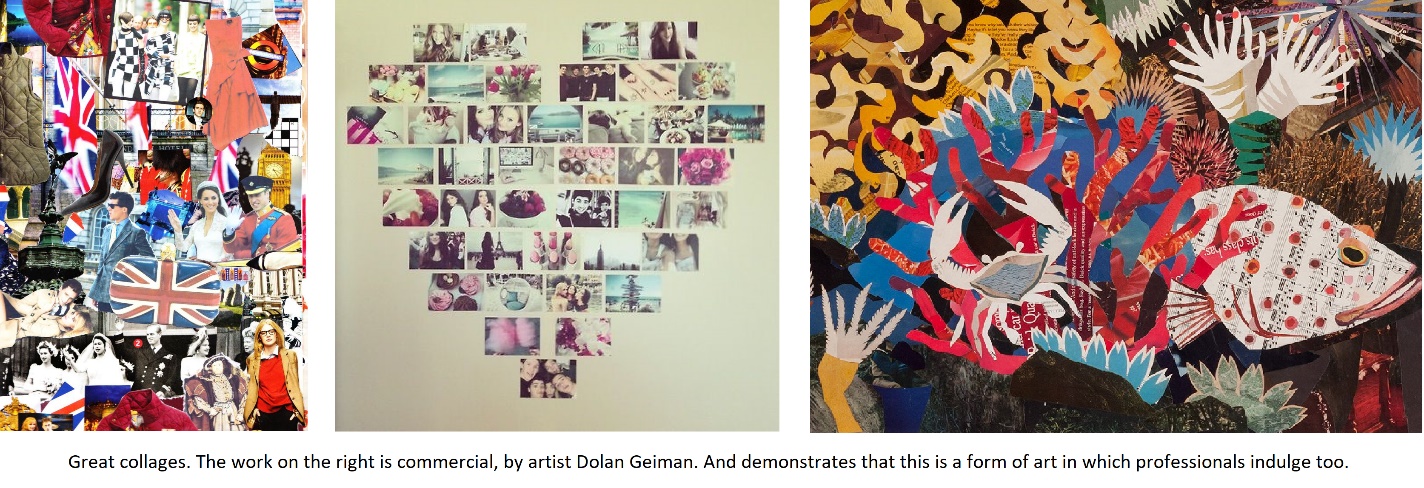
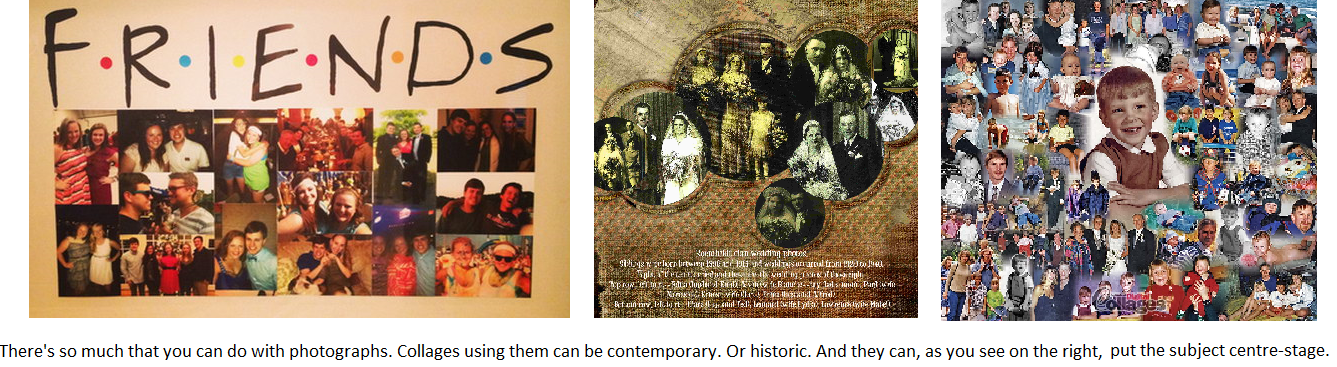
This is the second in a series about creating professional-looking art without being a professional artist, or even remotely artistic. As some of the images here show, amateur collage-makers can produce work so remarkable that only a seasoned snob would turn their nose up at it!
Traditional collages, as opposed to digital ones, use whatever is at hand: photographs, fabrics, printed media, dried flowers, shells, cord, feathers and curios, glued onto card or similar. The scope is unlimited. Even a child can make something genuinely worth framing. A collage:
- is a piece of original artwork
- is not subject to copyright
- can present an arresting and intriguing image
- can be made cheaply from worthless scraps
- costs so little that you can spend more freely on a decent frame.
The educational value
Making a collage with children can be very educational. You might show how your extended family came from the four corners of the globe: what people did for a living, where they lived and what their homes looked like, using maps, postcards and photos (copy the photos first and use the copies). It could even bring in mathematics if you label items with what they cost then and now. I recommend a visit to www.activityvillage.co.uk/collage.
Getting started
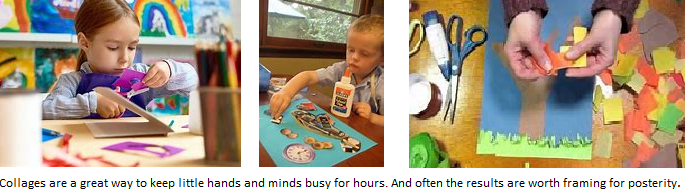
It's simple, which is why little kids can do it.
- Choose a base. You need a sturdy sheet of card, or painted chipboard or hardboard. White is probably best because it's neutral. Avoid glossy surfaces, which are harder to stick things to.
- Decide on a theme and the broad design, perhaps with a central unifying image. Your only limits are imagination, skill, the size of the piece and what you can afford to include.
- Cut and paste. Old-style, not as we do on computers.
Two obvious approaches:
- Many related images on one theme. You might tell a family history, with strands showing where mum and dad each came from.
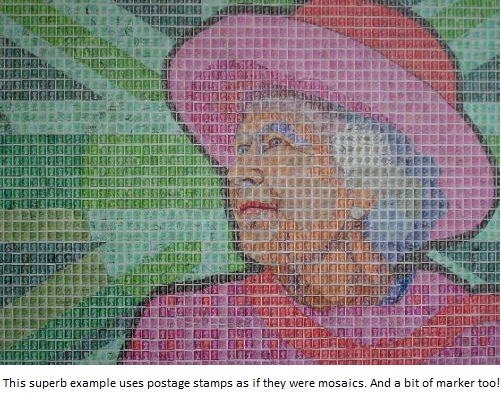
- Many cuttings making a single image, almost like mosaic pieces. You could make a huge image of Queen Elizabeth II using hundreds of old stamps for her lights and shades.
You'll find enormous numbers of images in newspapers, magazines, catalogues and old books. You can use print too, such as newspaper headlines. Some collage-makers use swatches of wallpaper and fabric from shops and sample books.
A craft shop may be worth a visit to see whether anything affordable would make a difference without looking out of place. It might even be some glue-on glitter!
Think in three dimensions
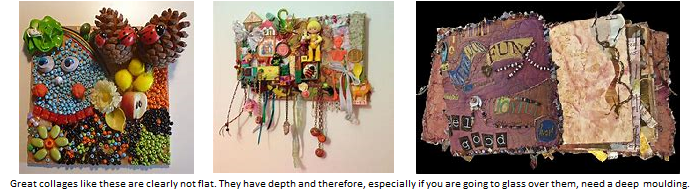
Collages don't have to be flat. A raised collage can be fascinating, but it takes a little more thought when you come to frame it. Frames can be deep.
Don't rush for the glue
Don't touch the glue until you have thought the collage out. Lay the components on the backing and keep rearranging them until you're satisfied. Then sleep on it and come back the next day, or the day after. There is no rush. If you're really involved in the project, your mind will keep working on it even while you're asleep.
Top tips
- Photograph the layout. If you have to take everything off to start gluing the bottom layer, a photo reminds you what goes where.
- Put the strongest image in the middle, as a general rule. It may unify everything.
- Project an outline for a mosaic. For something like the Queen's head, trace an outline onto clear plastic, project it onto your base in low light and mark it out. It's then easier to keep everything in proportion.
Glue
White or clear glue is best. Be careful about giving children glues that could be dangerous if sniffed. Take your time. Build the collage up in layers, giving each time to stick, and leave the whole thing overnight to dry before framing or hanging it.
Conclusion
A collage is a very affordable way to fill a wall with something that has involved you and possibly your kids. Its monetary value is irrelevant if it fills a space and engrosses those who see it.
If you make a collage you're proud of, you'll need it framing, and it may well need a deep moulding. Unless you know your stuff when it comes to picture frames and mounts, it's worth going to experts. EasyFrame is an obvious and affordable supplier, whether you want everything you'd need to do the job yourself or would rather they did it for you. Any good framer will show you a range of solutions and advise on what suits the work and where it will hang.
EasyFrame is on 01234 856 501 and sales@EasyFrame.co.uk, and they'll always chat even if you don't want to buy!