By Paul Dunwell, writing for EasyFrame
© Copyright EasyFrame 2019
Part I: How it probably started
Far be it from me to write about something esoteric, but when a fellow contractor working for EasyFrame suggested an article on the history of framing, we both realised we knew nothing about it. This article, the 1st of 3 because the history proved more complex than either of us imagined, walks through some rather intriguing facts. It runs from the first known frame to medieval framing and what Da Vinci would have expected in the 15th century. Without wishing to put ideas into your head, you may feel its learnedness makes it suitable for framing. (With 3 of these, you could make a triptych!)
In the beginning: Roman Egypt in the 2nd century
We have a problem. Framing very probably has prehistoric origins, before written records and possibly before the oral tradition of committing events to memory and recounting them as songs and poetry.
There is also the issue of preservation. The earliest frames were probably made of organic matter, which decays wherever there is humidity. So we shouldn't be surprised that the earliest surviving frames were preserved in Egypt.
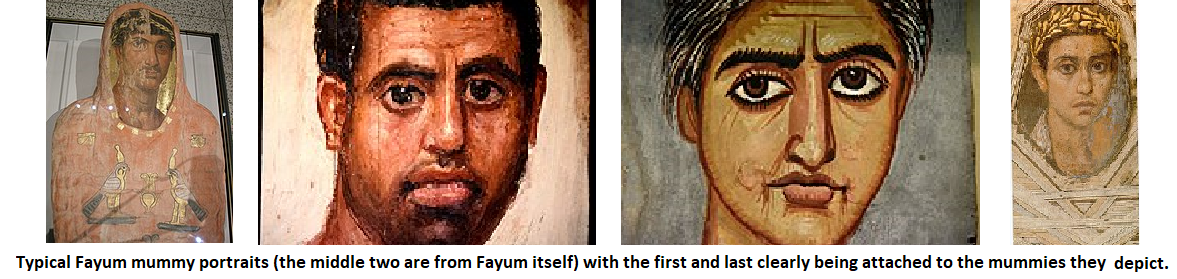
Fayum (or Faiyum) mummy portraits originated in Egypt's Faiyum basin, a depression containing an oasis in the desert south of Cairo and west of the Nile. The area was inhabited by Egyptians and also by Romans: after 30BC Octavian, later the emperor Augustus, defeated Mark Antony and set up a colony in what had been the Ptolemaic Kingdom. So the portraits are both Egyptian and Roman, though predominantly Roman, and painted in Greco-Roman style. Despite the name they have been found right across Egypt, but the Faiyum basin is the epicentre.
The portraits were painted on wooden boards and attached to the wrappings of upper-class mummies. There was probably a lot of panel painting in the first 3 centuries AD, but the tombs were hot and dry, which is ideal for preservation. Fayum portraits are almost always unframed. At least one, found at Hawara, was still in its frame when it was placed on the mummy. The thought is that it had hung on a wall in the 2nd century before its subject died, and was then repurposed.
Frames used to divide art: framing borders
Ancient Greek and Egyptian wall painters, mosaic artists and potters used frames to separate scenes, as we do today in cartoon strips. These 'framing borders' were made in the same medium as the art itself, whether paint, tiles or clay. They helped the audience to focus. They were not a protective and decorative edging like a modern frame.
From single panels to diptychs, triptychs and polyptychs
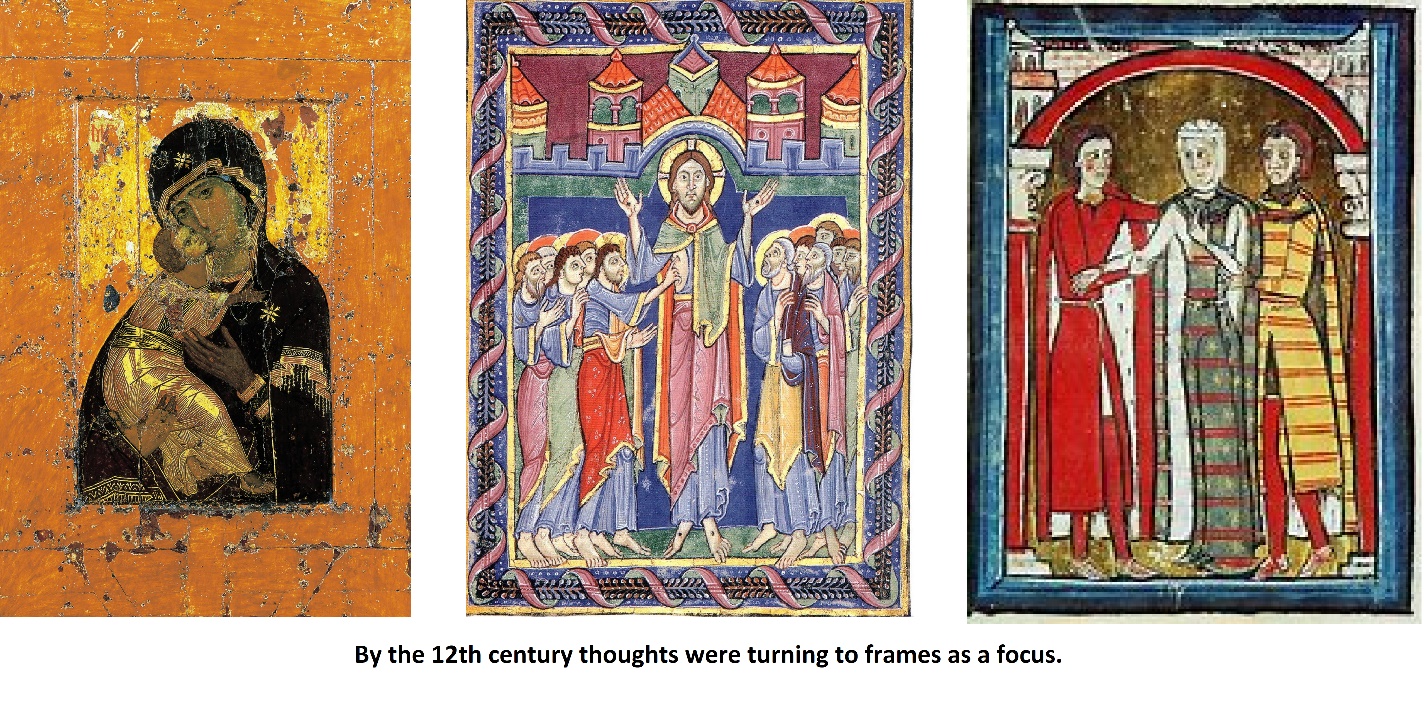
The tradition evolved, though art was still often painted on wood (sometimes with canvas glued onto it first). In the 12th century a panel might be single. Soon carpenters were building multi-panelled screens for diptychs (2 panels), triptychs (3) and polyptychs (more than 3). They usually showed religious scenes, and they folded for security and ease of transport.
The first carved wooden frames
The first carved wooden frames we know of were one-piece affairs around small European panel paintings of the 12th and 13th centuries. Instead of adding a frame, the craftsman carved out the area to be painted, leaving a raised border around the outside.
The whole piece was primed with 'gesso', a white mixture of a binder (perhaps egg) with chalk, gypsum or pigment. The frame was then usually gilded. Only after the frame was finished, in stark contrast with today, was the image painted on the flat panel in the centre. So framers at that time often enjoyed more status than artists!
The advent of the frame proper
It was only a matter of time before people realised that carving frame and panel from a single slab was a poor solution. It was labour-intensive and costly, and the frame got in the artist's way.
The answer was the 'engaged frame', made of mitred moulding strips that could be attached to a flat wooden panel after the artwork was complete. These became more and more elaborate. By the time Leonardo da Vinci was working, in the late 15th and early 16th centuries, any successful artist could expect to have their work presented in gilded frames.
Conclusion
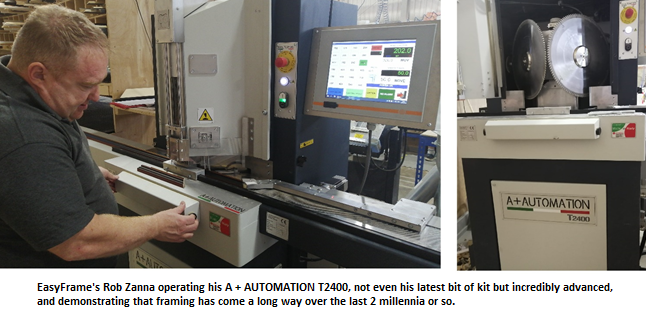
Framing has come a long way since the 2nd century AD, and companies like EasyFrame, with the most advanced machinery and materials available, are in the vanguard.
Sadly, along the way, artists have unaccountably become more important than framers. But as any artist will tell you, a framer who botches the job detracts from the artist's achievement.
In the 21st century, unless you know your stuff when it comes to picture frames and mounts, it's worth going to experts. EasyFrame is an obvious and affordable supplier, whether you want everything you'd need to do the job yourself or would rather they did it for you. Any good framer will show you a range of solutions and advise on what suits the work and where it will hang.
EasyFrame is on 01234 856 501 and sales@EasyFrame.co.uk.