

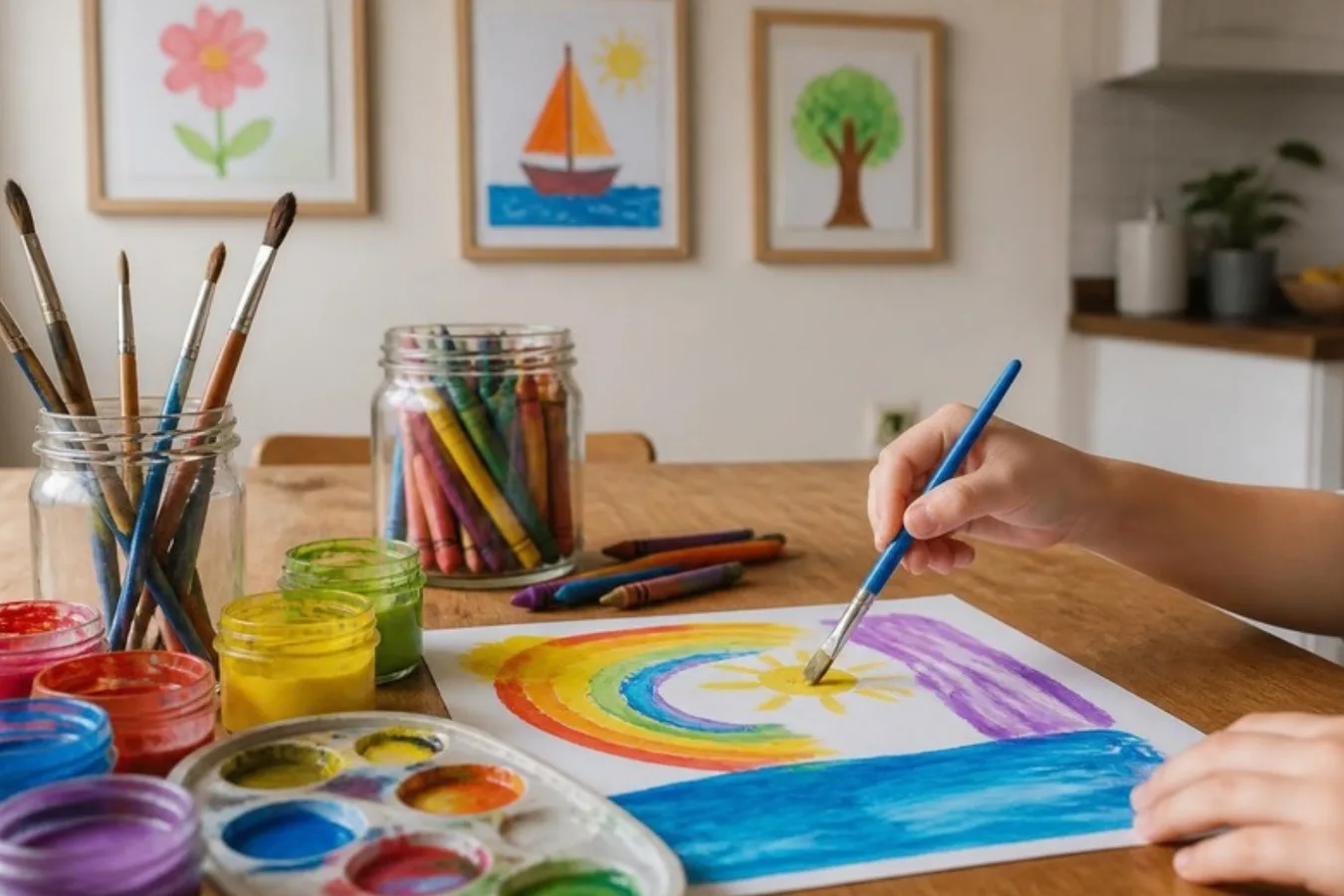
Not all of us are naturally arty. But it is a myth that you are either born a Michelangelo or doomed for ever to lose at Pictionary. Like playing the piano or learning a language, artistic skill comes from a mixture of natural ability and lots and lots of practice. There is hope for all of us.
If you want to set your children on the right track, here are four things to build into the week. Mum and dad will get something out of them too.
Visit galleries and museums
This is one of the easiest ways to interest children in art. Wherever you are in the UK, there is an art gallery or museum with free exhibitions.
- Toddlers respond best to brightly coloured shapes and sculptures of people.
- School-age children enjoy paintings, drawings and sculptures that tell a story.
- Older children can be introduced to famous artists. Ask them to find several works by one person and work out what makes the style special.
Whatever their age, children enjoy art most when you join in. Make it a game. Which colours and shapes has the artist used? How was that effect achieved? The history can be interesting too, so use the gallery's free guides, and translate the important bits into language they will follow.
Encourage them to think about the gallery as a whole. What is the lighting like, and how does it affect the pictures? What kinds of frame have been used? Are the other visitors enjoying themselves?
You could bring paper and pencils and let them make their own versions of what they see. It works best with older children, but little ones enjoy it as well, provided they do not draw on the exhibits.
Have art sessions at home
Children may have art at playgroup or school, but it is worth having sessions at home as well. They need not be daily. A couple of hours at the weekend makes a routine to look forward to. In fine weather, spread an old sheet in the garden and let them loose with paint, glitter and craft materials. In colder months, a calmer session indoors with pencils, pens and watercolours is fun.
- Toddlers love modelling clay, and it is good for their fine motor skills. Suggest they make the family, the pets, or cars, buses, trees and houses. They also love filling in shapes with bright crayons or poster paint.
- Slightly older children love coloured paper, card and a pair of child-safe scissors. As they grow, they can move on to collage.
- From about seven, drawing tends to become the favourite. Buy some good heavy paper and soft pencils, and let them draw your portrait, try a still life, or dash off a landscape at the beach or on a walk.
Frame and hang their art
One of the best things you can do is show that you value their work. You need not put up every page of the sketchbook. What matters is to take an interest and let them know you love what they do.
Remember that they have opinions about their own art. If they say they do not like something, do not make a fuss of it. But when they come to you beaming, with a drawing or painting they are proud of, that is the moment to give it pride of place.
Do not settle for a magnet on the fridge. Treat the pieces they are proudest of as you would a picture you had bought. Models can go on the mantelpiece or on a parent's desk. Paintings and drawings can go in a proper frame, in the hall or a room where they will be seen. When visitors ask about one, encourage your child to explain. What did they make it with? Where did the idea come from? They will love talking about it like a real artist.
Respect their style
Children's minds work differently from ours, so they will sometimes draw something a little odd. Resist the urge to disapprove of the subject, unless it is plainly inappropriate, because that can put them off art altogether. Encourage them to keep exploring. And remember that children go through phases. An obsession with drawing vampires at six is unlikely to last!
If you have a little one's masterpiece that needs a frame, visit our picture framing page, where you will find made-to-measure frames and mounts to choose from.