

By Paul Dunwell, writing for EasyFrame
© Copyright EasyFrame 2018
What this article is about
'Frame Academy I' covered the essential terminology. 'Frame Academy II' was a step-by-step guide to making a picture frame. 'Frame Academy III' explained how to gild a picture frame.
In 'Frame Academy IV' we retrace our steps a little and ask: why would anybody bother with a frame? And with so many options, what sort of framing should you be looking for? (And yes, there are going to be more sequels than 'Nightmare on Elm Street'.)

The purpose of a frame
A frame fulfils quite a few purposes. Mounted artwork or photography can be compared with jewellery. Beautiful stones are set in gold or platinum because they need to be held protectively. Yet the contrast between gem and metal is attractive in itself, and the setting draws the eye to the jewel it holds. Each enhances the other. The whole is better than the sum of its parts.
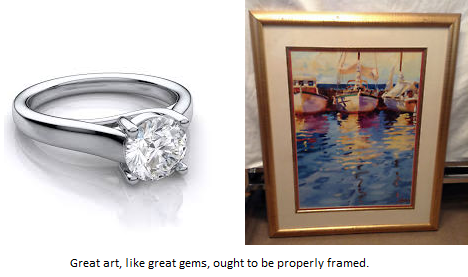
To continue the analogy, there are as many ways of holding gems as of framing artwork. A jeweller might use a 'bezel', 'prong', 'channel', 'bead' or 'burnish' setting, each suited to particular circumstances, such as the way the stone was cut. Likewise, anybody who wants to frame work should pause and consider how best to present and protect it.
In short, the frame is an opportunity to present artwork in its best possible light. It can greatly enhance what it holds, though even the most sumptuous frame cannot do much for a poor exhibit, and great artwork can be devalued by a shabby frame. In all fairness, though, artwork doesn't always need a frame at all.
Gallery-wrapping
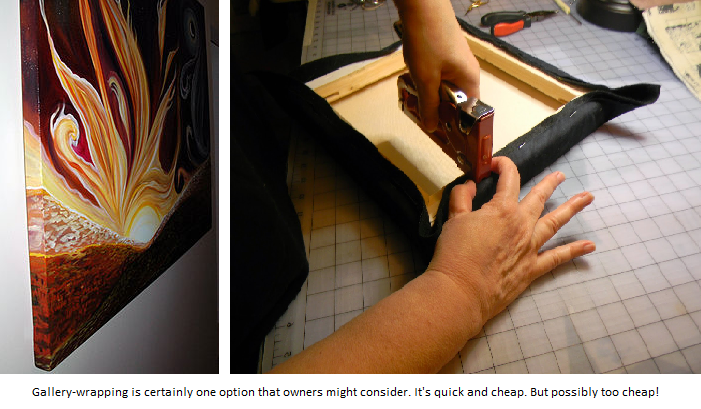
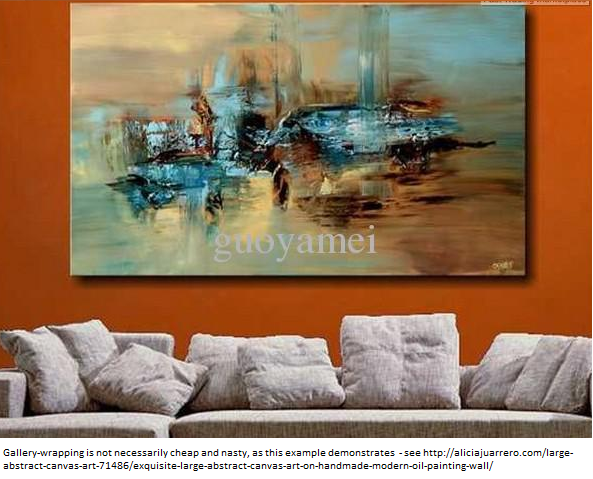
'Gallery-wrapping' is usually used for oil or acrylic paintings, though nowadays photographs and more can be printed onto canvas too. It uses no visible frame. The canvas is stretched over a robust hidden frame and stapled, tacked or taped at the back, so the edge of the work wraps around the sides. Occasionally the artist paints the outside edge in a contrasting or neutral colour instead. For more, see https://en.wikipedia.org/wiki/Gallery_wrap
Box-mounting
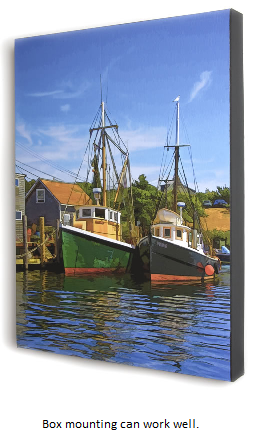
Another way to avoid a frame is 'box mounting'. Work on hardboard, or on a flimsier medium such as paper, warps easily, so it needs a rigid structure if you are going to display it. Box mounting provides one.
Going with something more traditional
As with art, there are no rules in framing. If you own the art, it's up to you. In general, though, the size and style of the work suggest the size and style of the frame.
- Classical, period and timeless art probably suits traditional framing, perhaps with gilding (see 'Frame Academy III'), or a broader, heavier frame in teak, mahogany or walnut.
- Contemporary work will probably be complemented by lightweight, unfussy framing.
- Anything in between could go either way.
Consider the front and side views, and how the work will look in the place you intend to hang it, alongside other work and the furnishings. Avoid a frame that competes with what's inside it!
Remember scale. In a modest home, as so many are, a really hefty frame will dominate a room to potentially ridiculous effect. A traditional frame adds quite a few inches to the height and width of the work, and it protrudes into the room too.
Floater frames
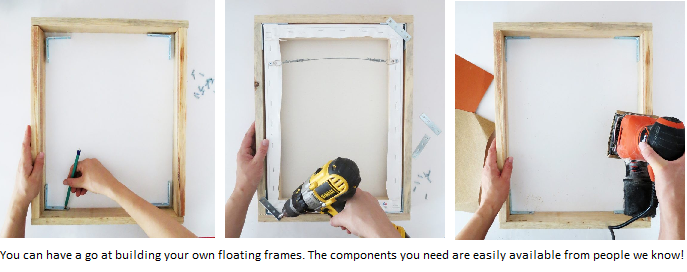
Floater frames are on a more sensible scale for compact modern homes. You can build them yourself if economy matters, though it's still worth buying in the supplies you need.
Multi-layered frames
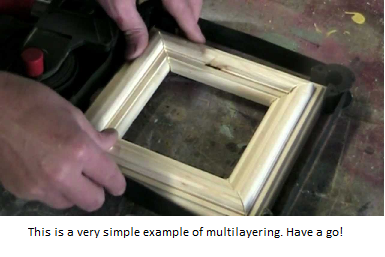
Alternatively you can use a series of mouldings, one inside another, possibly with a liner that is likely to be white, to create a custom frame that might be ideal for your purposes.
Conclusion
DIY framing takes time and patience, and it isn't always cost-effective. Whether you have a go will depend on whether it will be fun and teach you something.
The alternative is to go straight to a professional framer like EasyFrame, for the whole job or just the part that has left you jittery. EasyFrame can also supply much of what you need to do the job yourself.
EasyFrame is on 01234 856 501 and sales@easyframe.co.uk.