

By Paul Dunwell, writing for EasyFrame
© Copyright EasyFrame 2019
What this article is about
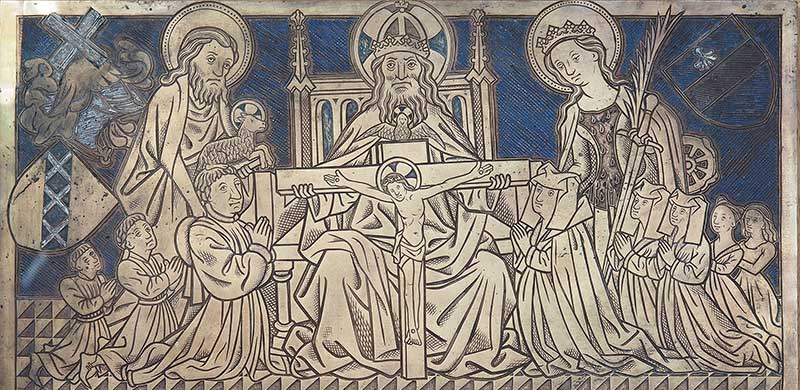
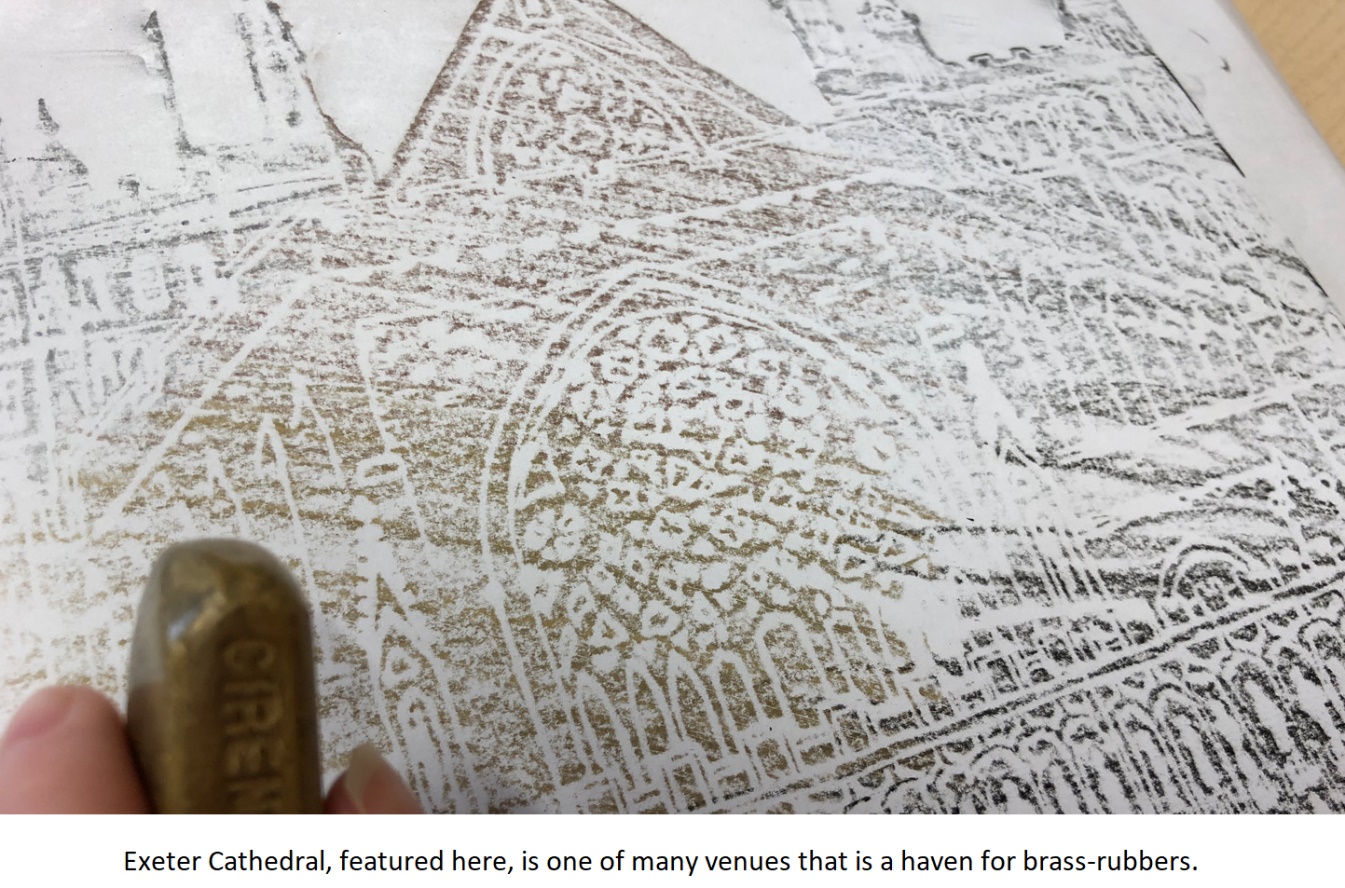
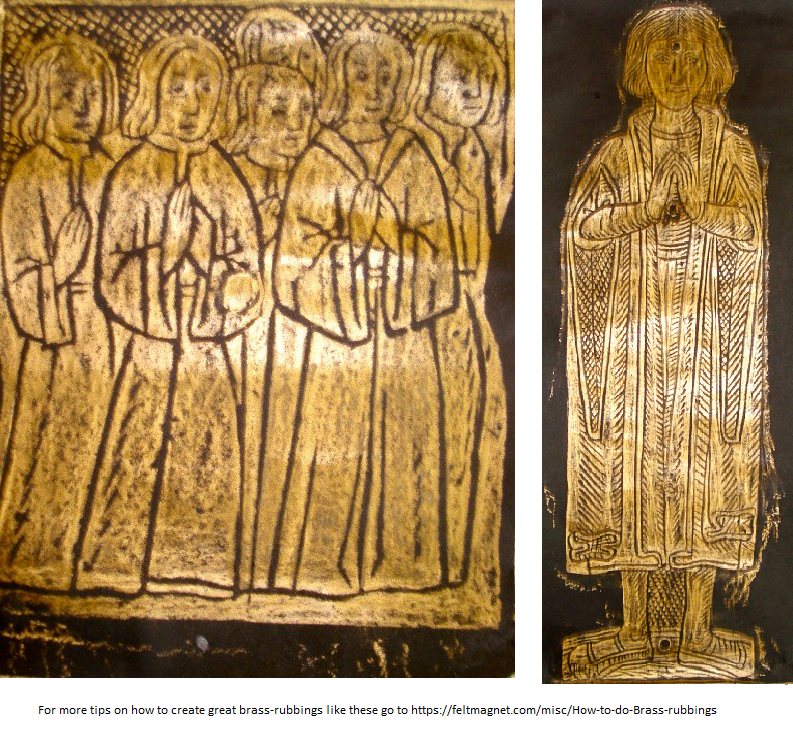
This is the first in a series about creating professional-looking art without being a professional artist, or even remotely artistic. As some of the images here show, amateur brass-rubbers can produce work so remarkable that only a seasoned snob would turn their nose up at it!
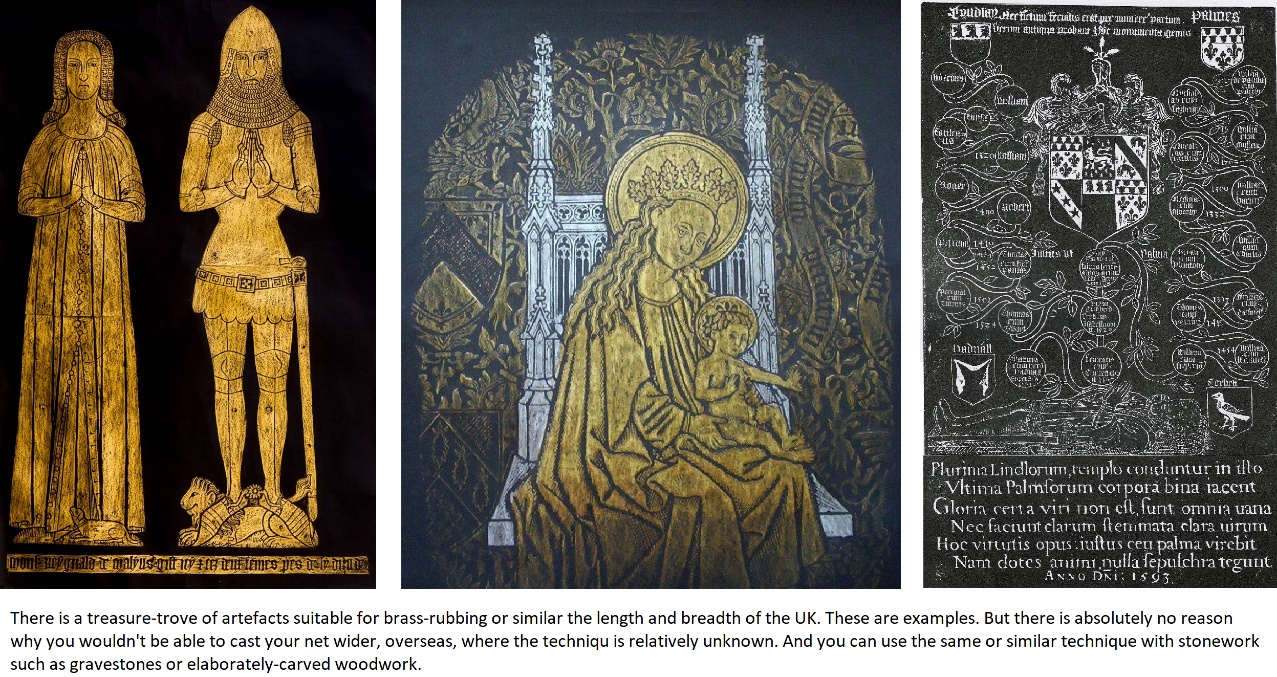
Brass rubbing is an almost uniquely British enthusiasm for copying monumental brass plaques, stonework and woodwork onto paper with wax crayons, chalk or another medium. It is akin to the tracing that virtually every child used to do at school, rubbing a pencil over paper laid on a coin, before we went digital. It gives anybody the chance to create something that:
- is a piece of artwork emulating the original artist's
- is not subject to copyright
- presents an arresting and intriguing image
- is often on an imposing scale
- costs so little that you can spend more freely on a decent frame.
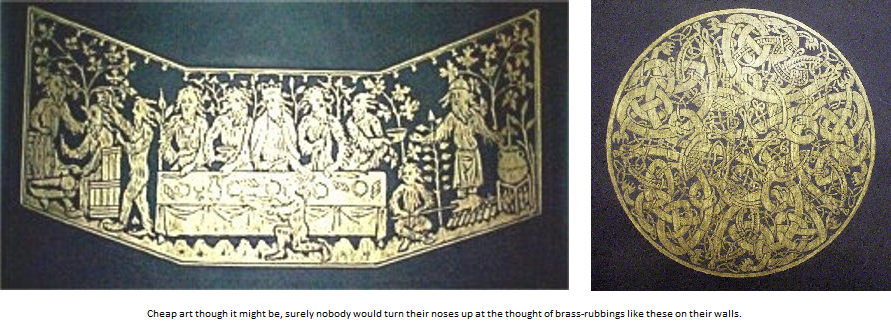
Rubbing is sometimes confused with 'frottage'. Frottage is done to capture a texture. Rubbing is done to capture detail.
The educational value
Brass rubbing has an educational value that teachers would call 'cross-curricular'. While making images, a brass-rubber picks up a lot of history: dates and events, geography, culture, clothing, language and more. The task can bring history alive for people who are otherwise disconnected from it.
The process in brief
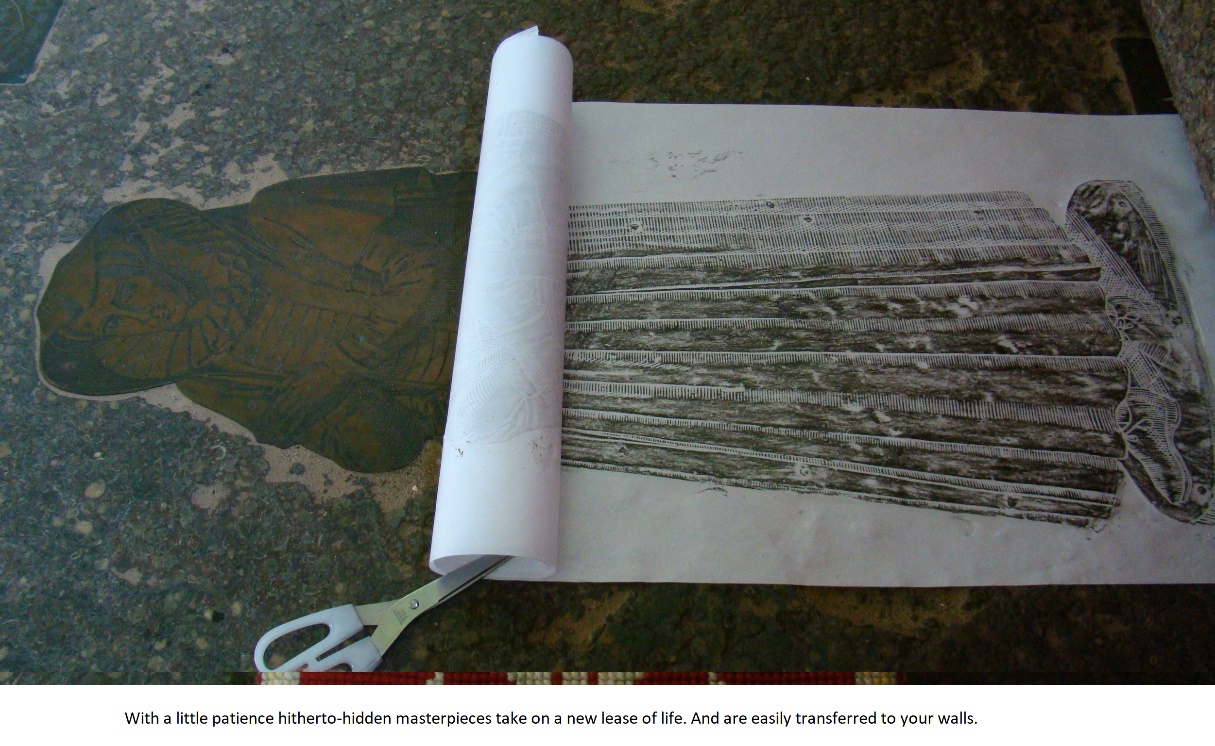
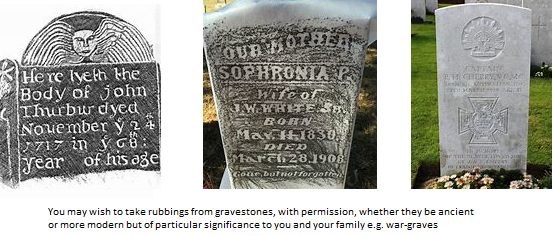
It's simple, which is why little kids can do it. Lay a sheet of paper (or something else, such as linen) on top of the brass. What we call brass is often an alloy of brass and nickel, and the same can be done on stonework or woodwork. Then rub the paper with wax, chalk, graphite or another medium, bearing down on the image beneath to capture the detail.
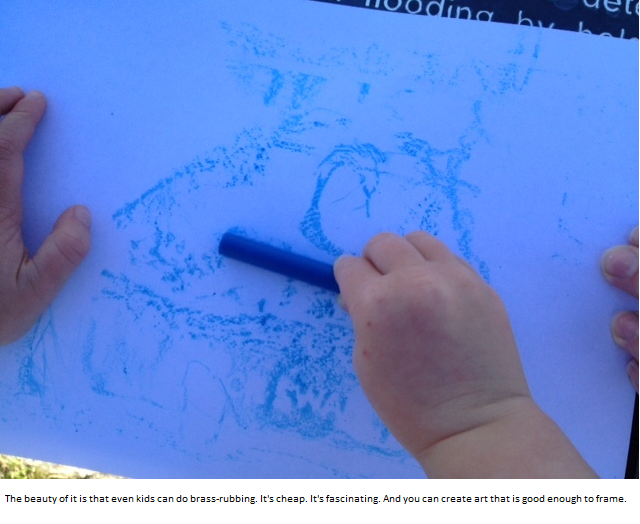
Historically, rubbings were often made with 'butcher's paper' and 'heelball', a black wax used on shoes. Today you can buy rolls of purpose-made paper and bronze, silver and gold crayons. See sources such as www.whitewindsbrassrubbing.com/434530184.
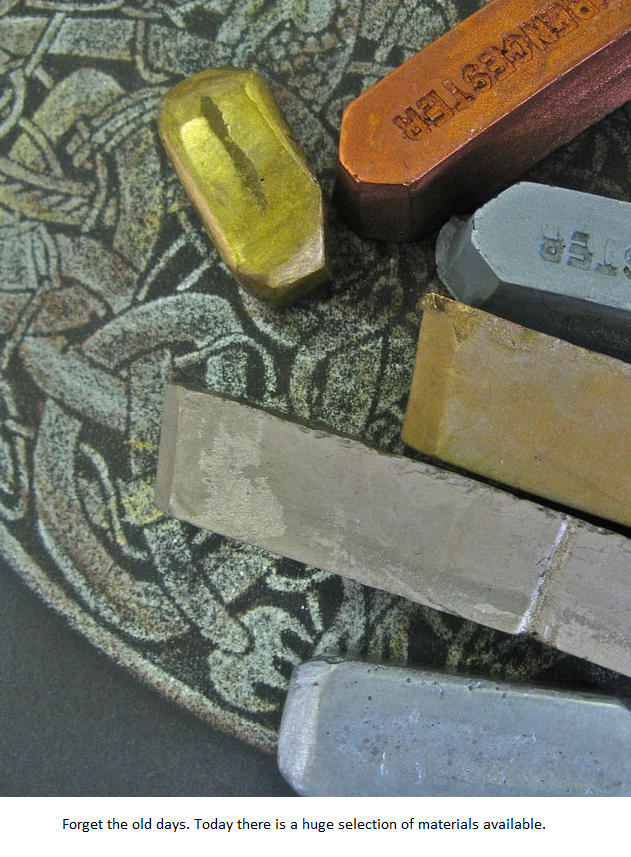
It's worth using your imagination when it comes to media. But never use anything that could be corrosive or might harm the work underneath!
Top tips
- Use paper big enough for the whole image. Joins in the finished work are hard to hide.
- Take masking tape or similar to hold the paper in place.
- Don't automatically exclude backgrounds. They may merit inclusion.
- Take a cushion if you're going to be kneeling for ages!
- Wear warm clothing and fingerless mitts in a church or graveyard.
- Take a brush and pan to clean up afterwards. Wax flakes during use, so don't leave bits all over.
Locations and sensitivity
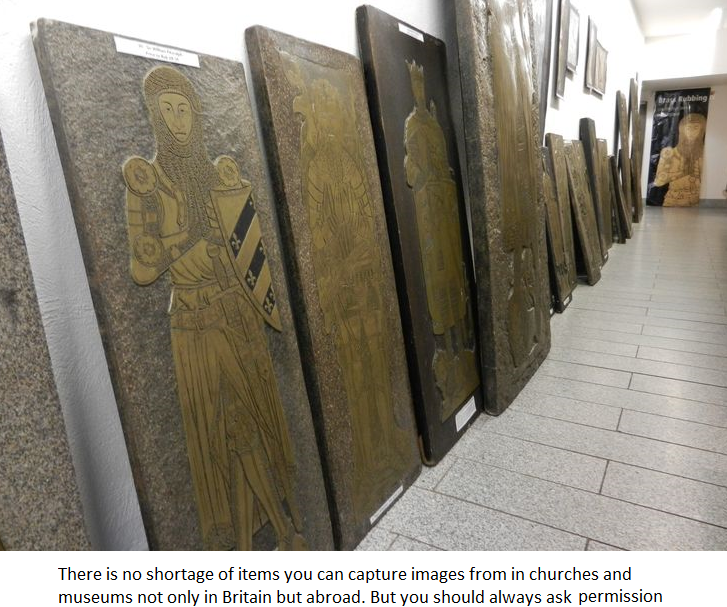
Many churches and museums let people make brass rubbings free of charge, though it is always a nice gesture to put something in the collection pot. Some brasses and monuments have been rubbed so often that wear is visible, and the authorities have banned rubbing or allow it only from duplicates, some of them smaller than the original.
Many authorities recognise that brass rubbing brings youngsters into churches and museums and sparks their interest. Venues that extend a heartening welcome include Exeter Cathedral and Durham Museum (see http://durhammuseum.co.uk/brassrubbing.html), which gives out the materials free.
In any event, please ask permission. In any religious setting, behave respectfully, and keep noise and language under control in particular.
Conclusion
Brass rubbing, which extends to ornamental stonework and woodwork, is an affordable way to fill your walls with something that has involved you and possibly your kids. Its monetary value is irrelevant if it fills a space and engrosses those who see it.
To find out more, go to The Monumental Brass Society at www.mbs-brasses.co.uk and the Feltmagnet site at https://feltmagnet.com/misc/How-to-do-Brass-rubbings. Many places encourage brass-rubbers, including families with children. St Martin-in-the-Fields in London has over 100 replica pieces from British churches and cathedrals, and for as little as £4.50 its staff will give you all you need and get you started.
If you make or buy brass rubbings you'll need them framing, ideally by one supplier. Many rubbings are large and need large frames, so unless you know your stuff when it comes to picture frames and mounts, it's worth going to experts. EasyFrame is an obvious and affordable supplier, whether you want everything you'd need to do the job yourself or would rather they did it for you. Any good framer will show you a range of solutions and advise on what suits the work and where it will hang.
EasyFrame is on 01234 856 501 and sales@EasyFrame.co.uk, and they'll always chat even if you don't want to buy!