

Buying a print can be confusing. You find an image you love, and then you have to choose between the 'giclée print' and the ordinary 'art print'. The giclée costs more, but the descriptions sound alike, and you are left wondering whether it is worth the extra.
Is one really better, or is it clever marketing? This guide explains the difference in plain English, so that you can choose the right print for your home and your budget.
The quick answer: A giclée print is a high-quality reproduction made on a specialist inkjet printer with pigment-based inks on acid-free fine art paper. 'Art print' is a general term, and often means a standard digital print, which may use dye-based inks and ordinary paper. The difference is in the materials and the process, and it affects how long the print lasts, how accurate its colour is, and what it is worth.
Difference 1: the printing and the ink


Giclée: precision and pigment
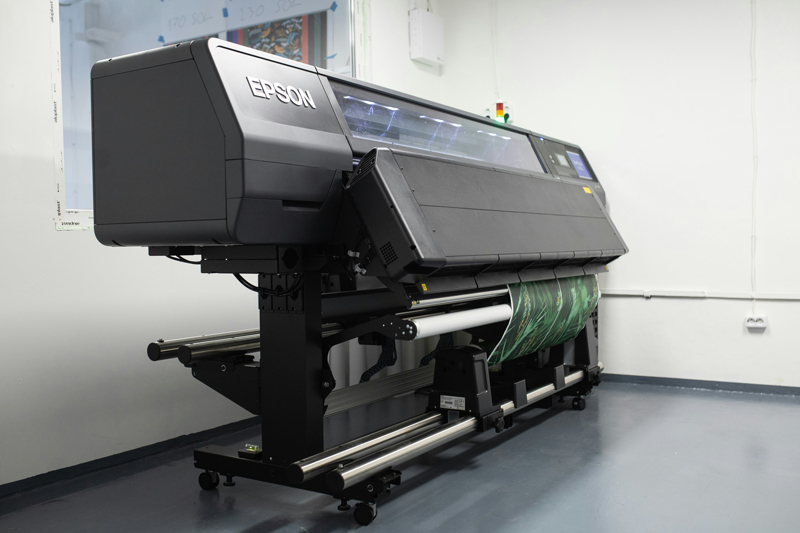
'Giclée', pronounced 'zhee-clay', comes from a French word meaning to spray, which describes how an inkjet printer works. A giclée is made on a professional printer with a wide range of colours, typically eight to twelve different pigment-based inks.
The pigment is the secret. These inks are tiny solid particles of colour suspended in liquid. They sit on the surface of the paper and make a very durable image that resists light.
Standard art prints: speed and dye
An 'art print' is often made by a standard digital process, on a four-colour printer using cyan, magenta, yellow and black, and frequently with dye-based inks.
Dyes are fully dissolved in the liquid and work by soaking into the fibres of the paper. They give bright, vivid colour at first, but they are less stable.
Think of painting a fence. Pigment ink is like good exterior paint, whose solid colour forms a lasting layer that withstands the sun for years. Dye ink is more like a wood stain, which soaks in and looks fine at first but fades much sooner.
Difference 2: the paper and how long it lasts

Giclée: archival paper
A proper giclée is printed on archival paper, which is acid-free and made for fine art. It is often heavy, with a lovely texture, and may be 100% cotton rag.
Because it contains no acid, it does not yellow or become brittle. Stable pigment inks on archival paper are what give giclée prints their long life. Cared for and framed properly, they are rated to last a hundred years or more without significant fading.
Standard prints: it depends
A standard art print may be on any of a wide range of papers, often ordinary photo paper or thin card. These are not usually archival, and may contain acids that yellow and weaken them over the years.
Difference 3: the quality and the cost

Colour and detail
With up to twelve inks, a giclée printer can reproduce a far wider range of colour than a four-colour printer. The result is rich colour, subtle gradations of tone, and detail very close to the artist's original.
Why the price differs
The specialist printers, the pigment inks and the archival paper all cost more, and the printing is slower and more careful.
There is no official standard for the word 'giclée', and it is sometimes used loosely. If you are paying a giclée price, ask the seller which inks and which paper were used.
Which should you buy?
It depends on what matters to you.
- If you are buying a limited edition by an artist you love, and you see it as something to keep, choose the giclée.
- If you want an affordable picture for decoration, a standard art print is an excellent and sensible choice.
Whichever you choose, protect it. A good frame and mount make a print look its best, and guard it against dust, damage and UV light. Acid-free picture mounts are especially important for archival prints, because an acidic mount would undo the point of the archival paper.
EasyFrame offers made-to-measure frames with archival mounts and UV-protective glazing. Call us on 01234 856 501 or email sales@easyframe.co.uk. We are happy to help, even if you are only browsing.