

Framing an oil painting adds depth and focus, and protects it over the years. The frame has a strong influence on how the painting is seen, and the right one can make a canvas the focal point of a room.
Oil paintings are generally framed without glass. The paint surface is robust once dry, especially when varnished, and its texture is part of the pleasure. The frame should suit the style and age of the painting and the room where it will hang.
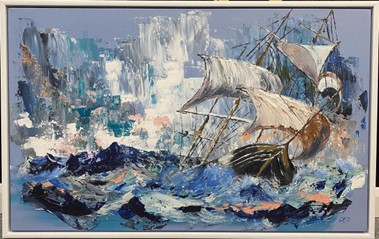
For older or more formal paintings, an antique or antique-style frame with rich detail adds elegance. Whatever you choose, the frame must not draw the eye away from the painting.
Choosing the frame
Materials
- Wood. Natural, classic and warm, in finishes such as oak and walnut.
- Metal. Sleek, modern, light and durable.
- Ornate mouldings. Decorated and gilded frames give a traditional look, and suit paintings with a lot of detail.
Consider how the texture and tone of the frame sit with the painting.
Style and colour
Traditional frames, richly detailed, add depth and character to classic paintings. For contemporary work, a simple black or plain wooden frame is usually better.
A frame that picks up one of the main colours of the painting creates harmony, and one that contrasts with them makes the painting stand out. Either can be right.
Depth
A painting on a stretcher is much thicker than a print. Measure the depth of the canvas as well as its height and width, and choose a frame with a rebate deep enough to take it.
Ways of presenting a canvas
Gallery wrap
In a gallery wrap, the canvas is stretched round a deep wooden stretcher and stapled at the back, so that the sides are clean. The artist often continues the painting round the edges. It can be hung just as it is, with no frame, for a modern look that suits contemporary and abstract work.
Float frames
In a float frame, the canvas sits inside the frame with a narrow gap all round, so that it seems to float. The gap makes a line of shadow that sets off the painting, and the whole of the picture, including its edges, remains visible. It is a smart, simple way to finish a gallery-wrapped canvas.
Traditional frames
A conventional frame overlaps the edge of the painting by a few millimetres and holds it from the back with clips or springs. Paintings on canvas board or panel are framed this way.
Step by step
- Make sure the painting is dry. Oil paint is dry to the touch within days or weeks, but takes months to harden through. Do not frame or wrap a painting while it is still tacky.
- Measure the height, width and depth of the canvas.
- Choose the frame to suit the painting and the room.
- Fit the painting into the frame from the back and secure it with canvas clips or offset plates. Do not nail through the stretcher.
- Add the hangings and hang it.
Hanging and protecting
D-rings and wire
D-rings are small metal loops screwed to the back of the frame, one on each side, about a third of the way down. Picture wire or cord runs between them. Use wire rated for more than the weight of the painting. Leave a little slack, so that it hangs evenly on its hook, but not so much that the wire shows above the frame.
Protection from the environment
- Sunlight. Direct sun fades colours and heats the paint. Hang paintings away from sunny windows.
- Heat and damp. Extremes of temperature and humidity make canvas slacken and paint crack. Avoid hanging a painting above a radiator or a working fire, or in a damp room.
- The back. A backing board fixed across the back of the stretcher keeps out dust and protects the canvas from knocks.
- Varnish. A coat of varnish, applied once the paint is fully dry, protects the surface. That is a job for the artist or a conservator.
- Glazing. It is rarely needed, but a valuable painting in a busy or public place can be glazed, with a spacer to keep the glazing clear of the paint.
EasyFrame offers a wide range of made-to-measure frames, and with long experience we can advise on the right frame for your painting. Call us on 01234 856 501 or email sales@easyframe.co.uk. We are always happy to talk, whether or not you want to buy.