

Art Deco picture frames blend the charm of the past with the sleekness of modern design. The style dates from the 1920s, the Roaring Twenties, a time of prosperity and invention. It marked a turn towards luxury and modernity, and it shows in the geometric shapes and clean lines that define it.
Timeless elegance
Art Deco frames are both distinctive and versatile, which is why they sit well in so many kinds of room. Whether in polished metal or painted in bold colours, they bring sophistication to any setting. Their symmetry and smooth finishes are pleasing in themselves, and they set off what is in the frame.
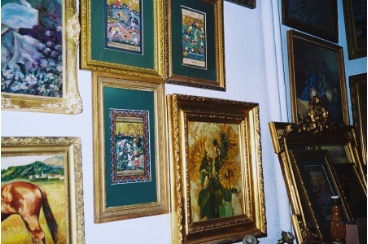
They also carry a sense of prestige, because the style is linked with some of the most recognisable architecture of the 20th century. The marriage of form and function in an Art Deco building is repeated, on a small scale, in the frames.
History and influence
Origins
Art Deco took shape in the 1920s and takes its name from the Exposition Internationale des Arts Décoratifs et Industriels Modernes, held in Paris in 1925. It flourished through the Twenties and on into the 1930s.
It drew on Cubism, Futurism and the Bauhaus, and replaced the flowing, natural lines of Art Nouveau with streamlined, geometric shapes. The designs reflected the new machine age. Art Deco stood for luxury and progress, and its glamour continued, in cinemas and ocean liners especially, right through the hard years of the Great Depression.
Famous Art Deco buildings
The style left its mark on architecture around the world. In New York, the Chrysler Building, designed by William Van Alen, and the Empire State Building show its boldness and grandeur. In Britain, the Hoover Building in west London, Eltham Palace and a great many cinemas and lidos are much-loved examples.
Art Deco architects combined modern materials and methods with motifs borrowed from ancient Egypt, Central America and elsewhere. The geometric forms and lavish decoration captured the excitement of the Jazz Age.
What makes an Art Deco frame
Materials and craftsmanship
Original Art Deco frames were made in luxurious materials. Exotic woods such as ebony and mahogany gave a rich, warm finish. Marble, mirrored and etched glass, and ivory added opulence. Highly polished metals, chrome above all, gave a sleek, modern look that contrasted with the natural textures, and leather was sometimes used too. The workmanship was precise.
Design
- Symmetry. Balance is central to the style.
- Geometry. Stepped corners, zigzags, chevrons and fans, and above all the sunburst.
- Bold contrast. Black and white, black and gold, black and chrome.
- Clean, streamlined lines. These are what give the frames their lasting elegance.
Black and white photographs, mirrors, travel posters and fashion prints of the period all look especially good in an Art Deco frame.
Art Deco in modern design
Interiors
The influence of Art Deco is everywhere in modern interiors, from furniture to kitchens and bedrooms. Geometric shapes, rich materials and strong colours create rooms that feel sophisticated. Chrome, glass and lacquered wood are still its signature materials. A single Art Deco frame or mirror is an easy way to bring the look into a room.
Art and graphics
The symmetry, vivid colour and stylised forms of Art Deco live on in painting, illustration and graphic design. Makers such as Lalique showed that the style extended to glass, sculpture and decorative objects that were useful as well as beautiful. That union of beauty and usefulness is still its central idea.
Collecting and caring for Art Deco frames
Care and restoration
Period frames can be delicate. Dust wooden ones with a soft, dry cloth. Chrome can be buffed gently, but worn plating cannot be polished back, and harsh polish will remove what is left.
Restoration can extend the life of a frame, but it should respect its history. For anything complicated, use a professional conservator, who can repair damage with techniques and finishes that are right for the period.
Keep frames away from damp and direct sunlight, in steady conditions.
Buying
Genuine Art Deco frames are collectable, and good ones fetch high prices at auctions and antiques fairs.
- Look at the workmanship. Originals are well made and well finished. Reproductions often lack the fine detail.
- Consider condition, rarity and provenance. All three affect the value, and frames by known designers are worth most.
- Be careful with ivory. The sale of items containing ivory is now tightly restricted by law in the UK, so take advice before buying or selling one.
- Take expert advice before spending a large sum.
If you like the look without the antique price, a new frame in black, silver or gold with strong, simple lines gives much the same effect.
EasyFrame offers a wide range of made-to-measure frames, and with long experience we can advise on the right frame for your artwork. Call us on 01234 856 501 or email sales@easyframe.co.uk. We are always happy to talk, whether or not you want to buy.